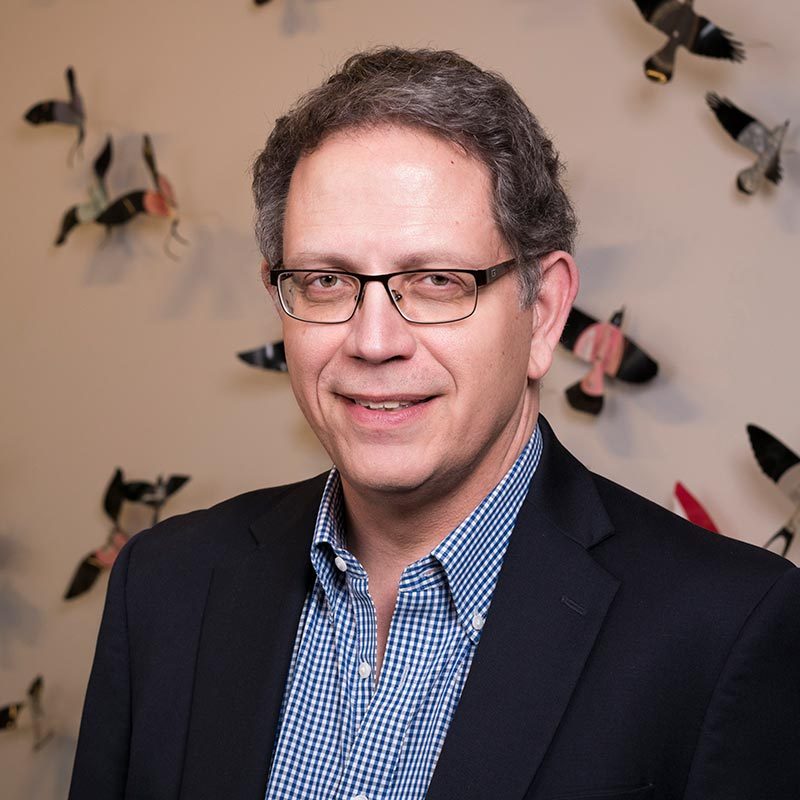
Philanthropies need to stop focusing simply on giving away money and instead think about how to bring about change, says Mark Kramer, founder and managing director of FSG Social Impact Advisors and a senior fellow at the Kennedy School of Government at Harvard University. FSG Social Impact Advisors is a nonprofit consulting and research organization that works with various sectors to “accelerate the pace of social progress.”
 Despite having the world’s largest nonprofit sector, America continues to have serious social problems. What’s needed, Kramer says, is a new approach he calls “catalytic philanthropy.”
Kramer spoke with Faith & Leadership about catalytic philanthropy, effective evaluation and the role that faith-based organizations can play in mobilizing action.
Q: Why aren’t nonprofit organizations more successful in effecting social change?
The nonprofit sector in the United States is vast -- certainly the largest in the world by far. People give three times as much per capita as any other place in the world. Charitable giving has increased more than 250 percent in the last 25 years in inflation-adjusted dollars. Yet it’s hard to see a lot of progress.
What I’ve come to believe is that the sector is filled with so many small organizations -- 90 percent have budgets of less than $500,000 and only 1 percent have budgets over $10 million -- but no one organization can solve major social issues.
But there is not a mechanism for collaboration among these nonprofits, and there are market forces working against collaboration. The whole approach to fundraising now discourages collaboration. To get funding each nonprofit has to say, “My approach is better than someone else’s approach.”
Q: You offer a different model that you call “catalytic philanthropy.” What is that?
The difference between thinking about giving away money and thinking about solving social problems has become more and more powerful to me.
I recently wrote a piece in the Stanford Social Innovation Review called “Catalytic Philanthropy.” We studied successful philanthropists and discovered four distinct practices.
First, successful funders haven’t waited for people to come to them. They take a personal responsibility -- they haven’t just delegated. They tend to first take responsibility for achieving results. They stopped thinking about what organization to support and started thinking about how to solve a specific problem.
They’ve also campaigned for change. They’ve assembled the pieces of a solution, which an individual nonprofit can’t do. There are so many issues where it’s not that we don’t know the solution. It’s not that we don’t know how to make a good school or how to do welfare-to-work training programs. The issue is: How do we make it happen? How do we get it to scale?
In order to address these issues, it’s important to mobilize different groups to solve social problems.
Third, they use a whole range of tools, beyond the nonprofit sector and giving away money. These tools include corporate resources, investment capital, litigation and lobbying.
The last piece is that they create actionable knowledge. They’ve got a target audience, they’ve got a clear sense of what they want the audience to do, and they use knowledge about the problem to motivate people to action.
One example is Jeff Skoll [first president of eBay Inc. and founder of the Skoll Foundation] producing the film “An Inconvenient Truth.” He got information to the public that’s highly effective.
Q: You’ve talked a lot about donors. What about the folks on the other side, who are trying to get money for projects?
All of these four tools are things you can do whatever side you’re on.
We’ve seen a disappointment set in with major donors. They’ve been giving generously for years, and they don’t see a change. And they get burned out.
The trick is to give your donors a very concrete sense of what has been achieved. Are you really bringing about change on an issue -- lasting change? The more you can engage the donors, using more than just their checkbook, and make them aware of the issues, really engage them in a campaign for change, convey actionable knowledge to them, the more the contributions will follow.
Q: How do faith-based organizations fit into this model?
Religious organizations are very, very well-situated to use two of these tools. Mobilizing a campaign for change is something they are in a position to do. They have the trust and credibility -- not like a corporation or even a nonprofit.
They obviously have a tremendous network of supporters, members whom they can reach and influence.
The other way they can be very, very powerful is actionable knowledge. They can convey information that can help people change behavior.
For us, effective philanthropy is always about more than just the money. Because money doesn’t solve social problems. I think faith-based organizations have tools they can use to effect change.
Really their challenge is focus -- you can’t do it with six or seven different issues. You have to have one or two. It doesn’t mean you can’t support projects in all different areas, but the effort you put into one issue has to be on a completely different level.
Q: How do you show progress when, as you say, it’s hard for one organization to affect large-scale change?
There’s a little bit of a tension in philanthropy between visionary and inspiring goals and achievable objectives. The great thing about a vision is that it’s very motivating and inspiring to people. But it doesn’t help you figure out what to do, where to begin or to measure progress in a meaningful way.
The most challenging thing is to pick a target that’s small enough to really make a difference. If you don’t know what’s going to be different in five years in the world if you’re successful -- something you can really achieve -- it’s very hard to plan a strategy. That need to be concrete is tremendously important.
Q: How do you effectively evaluate whether you’ve achieved that goal once you’ve set it?
Over the past few years, there has been a shift in evaluation in two ways. One is moving away from the idea of a retrospective perspective: What did our money do, and how do we know we made the change?
Also, there’s now much more emphasis on using evaluation as a tool for learning: How do we refine our strategy based on what we’re learning?
Traditionally you’d hire someone to evaluate your program and do a report on what outcomes were achieved. But increasingly we’re finding that people are looking for more informal and timely indicators of performance: What can I look at every quarter to see if I’m making progress? How can I gather data from many different sources?
This is a shift from a historical perspective to a forward-looking tool for strategy refinement. It sounds like a simple shift, but it’s very difficult in practice.
Q: Talk about your recent study of web-based evaluation tools.
We did a study recently, “Breakthroughs in Shared Measurement and Social Impact,” in which we examined 20 efforts to use internet-based tools for shared approaches to evaluation. We’ve identified three different breakthroughs.
One is shared measurement platforms, in which organizations use web-based tools to inexpensively collect, analyze and report data. One example of this is the Success Measures Data System. This is a tool for measuring success, working with community development organizations. There are 50 different indicators of the health of communities. Any community development organization can join and have access for $2,500. That’s amazingly cheap. About 200 organizations are using it.
Another area is what we call comparative performance. One example of this is the Cultural Data Project, started in Pennsylvania. More than 2,000 arts organizations are using it, using a common annual data-gathering questionnaire. It is also used as in grant applications.
Because of this tool, you begin to talk about the field as a whole. We can talk about arts organizations in Pennsylvania in a way we never could before.
The third is adaptive learning systems. This is an ongoing facilitation process in which organizations don’t just report data in the same way, but also align their work with each other and learn from each other.
In Cincinnati, an initiative called Strive includes the public schools, philanthropies, nonprofits, corporations and the archdiocese, among other partners. It is a partnership of organizations in that community dedicated to improving education.
It impressed me so deeply because in general there’s no mechanism for nonprofits to learn from each other. Donors generally say: Which nonprofit is the best -- I’m going to give my money to them.
Instead, in this case they say: There are organizations all over the city. How can we help them learn from each other, coordinate their activities and improve their effectiveness collectively over time?
Now all the afterschool programs can talk to all the career counseling programs. Together, they decide what they’re going to measure. And the internet and web-based tools is what’s enabling this.
Q: So evaluation and catalytic philanthropy are related?
People have been talking about collaboration in the nonprofit sector for decades. I think the difference is creating the infrastructure.
Everybody’s busy with their own projects and their own priorities. Unless there’s an infrastructure that holds the collaboration together, it’s not possible for it to succeed or to survive.
But it doesn’t take a lot of money to support the infrastructure. Strive leverages a small amount of money to coordinate lots of people. The culture project has staff and a help desk to make sure the evaluation system works.
You need the infrastructure if you’re going to help organizations. I can imagine faith-based organizations in a city being able to provide an infrastructure. They can be a nucleus for these kinds of collaborations.