
The book “Resurrecting Excellence: Shaping Faithful Christian Ministry” grew out of a conversation that began in 2001 among a diverse group of people gathered to consider what the vocation of ordained Christian ministry looked like at the beginning of the 21st century.

The gathering was part of Pulpit & Pew, an interdenominational research project funded by Lilly Endowment Inc. to assess the state of the pastorate in the United States.
The title of the book refers to their belief that “excellence” is “an important and life-giving notion, so long as the primary referent is God” and it is patterned on the life, death and resurrection of Jesus Christ.

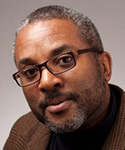
A decade after the conversation began, and five years after the publication of the book, authors L. Gregory Jones and the Rev. Kevin R. Armstrong discuss how the landscape and language of ministry has changed -- and stayed the same -- in the intervening years.
Jones is senior strategist for Leadership Education at Duke Divinity and a professor of theology in Duke Divinity School, where he served a 13-year tenure as dean. He is an ordained United Methodist pastor and the author or editor of 14 books and has published more than 100 articles in a variety of publications.
Armstrong is senior pastor of North United Methodist Church in Indianapolis. He is a graduate of DePauw and Duke universities.
Jones and Armstrong spoke to Faith & Leadership about how the idea of “excellence” can be applied to ministry. The following is an edited transcript.
Q: What do you see different in the landscape since you wrote and published this book in terms of this notion of excellence?
KA: Well it’s certainly become a measure of pastoral congregational vitality in the way that’s different than before the book; the introduction of excellence as a helpful way to consider, biblically and theologically, our life together.
Excellence, I think, had been pushed to the side of the conversation because it had been attributed only to marketing or to business or to a sense of ego rather than recovering a more robust biblical and theological mission.
GJ: I think also, as Kevin suggested, the claiming of biblical and theological understanding has helped people move away from just assuming that excellence has to be understood competitively; to see it as an aspiration that actually helps all people flourish.
We had to wrestle with the ways in which excellence is understood in some contexts and whether we were just importing it from an alien context. As we wrestled with Philippians and have helped to engage others in conversation, I think it’s now understood much more in a rich biblical and theological way.
Q: Do you get a sense there’s a change in the acceptance of the idea and the language?
GJ: There are still some people who argue with it. It’s a lot less than there was 10 or 12 years ago. Still, it’s not a term that’s been part of the last 100 years of accepted discourse, so there are still going to be people for whom it raises an eyebrow.
Q: Where have you seen a difference as this conversation has advanced and what does it look like?
GJ: For a number of clergy and congregations there’s a more aspirational and hopeful tone. One of the things that did happen for a period of time was people got into a kind of “ain’t it awful” mode of complaining about church and ministry, that things had changed.
The notion of a theological sense of excellence and the way Paul describes it, particularly in Philippians, gives a sense of a communal way of life that’s really rich and hope-filled that I see congregations living out in new ways.
KA: I hear people recovering a sense of attentiveness to the arts and to beauty. I don’t attribute that to anyone reading the book, but the landscape itself has changed.
I think this has a lot to do with young adults bringing with them a passion for the arts and a search for beauty in relationships and in the treasures of our tradition and our literature.
Q: Do you see evidence that there’s a new narrative related to ministry?
KA: I think the term “excellence” becomes inserted into conversations because of the literature and conferences that are available to pastors now. I think there is still a long way to go in discovering what excellence means for the community of faith in this culture and in this work. But I think the introduction of the notion is an important starting point.
GJ: It’s going to take longer to actually live into that in a rich and fulsome way, but I think the very language begins to shape imagination. That’s what has really become significant: People see a hope-filled imagination as something that’s possible and important in a time when it’s easier to get preoccupied with the problems or bureaucracies or the things that are stuck.
Q: You talk in the book about these images; the learned minister, the wounded healer and the CEO. Have new images of ministry emerged?
GJ: There’s a renewed image of the dignity of the role of pastor. This is attributable particularly to the work of Eugene Peterson. Part of what we hoped to suggest was that too many congregations and ministers have spent time trying to be amateur versions of a lot of other vocations rather than recognizing that there is a significant dignity to the vocation of being a pastor.
Peterson has narrated that in a whole series of books in really beautiful ways including his most recent memoir called “The Pastor.” That’s the most hopeful image of ministry that I see.
KA: This is not about the pastor who is only on the street and in the community or only in the study preparing for the week ahead or only doing the pastoral duties, but a pastor who is imaginative enough to integrate those experiences rather than seeing them as a series of events.
Q: You’re both describing a shift from an image of a pastor as negative, lonely, isolated, struggling, doing everything for everyone and not doing anything well, to the proud vocation that includes all of those pieces.
GJ: Being a pastor doesn’t mean you have to be good at everything. But it does involve a role where you learn how you have to depend on others, whether within a staff or the whole congregation.
It’s significant to us that we talk about the ministry of all Christians in a chapter before we talk about the ministry of the ordained. The pastor’s role is, to use a phrase from Ephesians, to equip all the saints for ministry. So it’s not that a pastor necessarily has to be great as an accountant or a strategist but they need to know who to turn to that can fulfill those roles.
I think that this image of pastor provides an opportunity for an integrated approach that arises out of -- and in crucial ways depends upon -- the larger community for the flourishing of the work of the church.
KA: Pastors are among the last remaining generalists among the professions. There has been some resistance to that because a business model would say if you’re not a specialist and you don’t work with a set of specialists your institution won’t thrive. But that doesn’t take into account what Greg is talking about-- the generalist who relates to and relies on the gifts of the whole community.
Q: So that that’s a role that exists in relationship, in the context of relationship with many others.
KA: Relationship to God through the community of many others, yes.
Q: In a lot of ways the book is about inhabiting a mindset, and about practices that sustain ministry over a lifetime. How does it offer a pattern for young clergy?
KA: I hope that it provides a language that remains distinct from some of the fads of every generation. There is a core and a tradition here that serves as a reminder of what excites us, what gets us up in the morning as pastors, what keeps us going.
While 20 percent of the work we do may get us discouraged, how do our traditions speak to that other 80 percent of our life that allows us to relish the call and to grow in it?
GJ: The image that we used in the book of living at the intersections has grown on me over time.
I sense among young people generally an enormous frustration with the ways in which our generation and older generations have left them with polarized environments in the church, in politics, in the broader culture generally, and they really want to find alternatives.
I think the image of living at the intersections in ways that refuse the categories that we’ve stuck them with is a hopeful sign. It’s one that I hope they’ll do a lot better job with in their generation than we have thus far.
Q: Kevin, one of the symbols of living at the intersections in the book is your church, North United Methodist in Indianapolis. Talk a little bit about what it means to literally live at an intersection.
KA: When a field ed student arrives at North for the first time, on the first day I walk with him or her to that intersection and we stand and look at what each of the four neighborhoods around us are like socioeconomically.
Then we talk about: Does this church live at the center of four neighborhoods or at the periphery of four neighborhoods? It all depends on one’s point of view.
One of the challenges for North Church over its 80-plus years has been not to be confused into choosing one corner over another but recognizing that we live and move among all of those neighborhoods and that our primary gift in that neighborhood is as a convener.
The real passion and role of the church is to provide a safe place for people in each of those neighborhoods to meet at the table and to stay there over time, whether that’s for a neighborhood issue, whether it’s for an interpersonal opportunity.
There are many resources in our congregation among the people who live around the city. Some bring wisdom; others bring knowledge; some bring wealth and others bring access.
We struggle with moving back and forth between sensing ourselves at the center somewhere and also being at the periphery of this place that we occupy and listening attentively for the ways in which we can be drawn into a variety of communities and discover the way God is at work in the places that we sometimes overlook.
Q: Briefly describe the four neighborhoods, what your intersection actually comprises.
KA: On one corner area is one of the wealthiest neighborhoods with the highest property values. On the opposing corner is one of the poorest neighborhoods with the fewest homeowners and highest crime rate. On another corner was the first racially integrated neighborhood association in the country that has an art museum, a university and a seminary, and on the opposite corner of that neighborhood is a neighborhood that’s now revitalizing through a housing development corporation that a number of our churches helped to start.
The age ranges, the income ranges, the racial diversity among those four neighborhoods strikes one as very odd. How can so many differences be separated by one three-lane road? How has that intersection over time created a very wide boundary of the mind in our city?
Q: Talk about the phone in your lobby. It’s a small detail, but significant.
KA: For as long as I have known there has always been a public phone in the lobby of the congregation. When the building is open from 7:30 a.m. until 9 p.m., anyone can come in and make a local phone call.
Folks can call the doctor. They can make a return call about a job. It’s also been used by locals who are in the drug business, and that’s part of the messiness of what goes on. But it provides a means of access that folks can’t find in any other agency in the neighborhood.
It also creates a sense of ownership to the ministry -- not just the phone but the fact that we’re an unlocked church. Folks in the neighborhood who are not members of the church still regard it as their church and are attentive to what goes on there.
Q: What is the same about the landscape from when you originally articulated this notion of excellence?
GJ: I think there’s still a hesitancy to talk openly about money, whether it’s the relationship of church budgets to the commitments of the congregation to talk about that as a matter of discipleship. We still seem to have a peculiar problem in the United States, particularly in mainline congregations.
It’s part of a broader issue in Christian institutions generally. We think of ourselves as nonprofit, which means we don’t need to talk about money at all, and we think there’s some angel who is going to come in and solve the budget challenges.
Q: Is there anything you would add as you reflect on this goal of excellence? Is there a yardstick to measure it by?
GJ: There are debates in the churches about whether evaluating ministry or congregations or pastors ought to be quantitative or not, whether there ought to be numbers.
We have to get away from either/or thinking; that people who say that numbers don’t matter are often simply wanting to evade questions about why they’re not more attentive to certain issues. The people who think that numbers measure everything also seem to want to evade all of the quiet and hidden ways in which ministry occurs.
Excellence can’t be marked only by buildings, budgets and those sorts of things but neither can they be measured only by the faithfulness of a pastor spending significant time in pastoral care.
KA: One of my colleagues on staff also serves a small congregation in downtown Indianapolis that has opened its doors to the arts community. A group of young people gathered there recently. An artist came in and was teaching them how to use yarn to create a picture of the most important person in their lives.
This 8-year-old girl created a portrait with yarn. Her father visits a couple of days afterward. Walks in. Sees this lovely but clearly child-designed portrait and immediately recognizes himself. He starts crying and, in the presence of the pastor, says “I had no idea that I was that important to her.”
That story gets to me still.
I think that’s one measure of a congregation’s faithfulness -- to connect people who didn’t realize they were important to each other. That congregation also struggles to keep its doors open financially. They have to be attentive to whether those moments can occur, and what it means to tell others that story as a sign of significance of what’s going on there.
They can’t pay attention only to one or the other. It has to be to both.
I think our image at the end of the book -- it’s not ours but was very generously shared by Bishop David Lawson -- is: Where will we bury our heart? Where are the places in our life together that we would want to say: This place, these people, this ministry is so important we’re going to put our heart here?
I think that’s what we hope pastors and congregations continue to ask themselves. How do we live together in such a way that where we are becomes such a place for others and not just for ourselves?