 Joseph Bathanti’s poems reflect his life. Raised in a close-knit, blue-collar community of Catholic immigrants in Pittsburgh, he attended parochial school and lived near his parents and other relatives until he was 23.
In the 1970s, he first ventured out of Pennsylvania to work as a VISTA volunteer with prison inmates in North Carolina. He met his wife-to-be on his first day of training and has since continued to live and work in North Carolina.
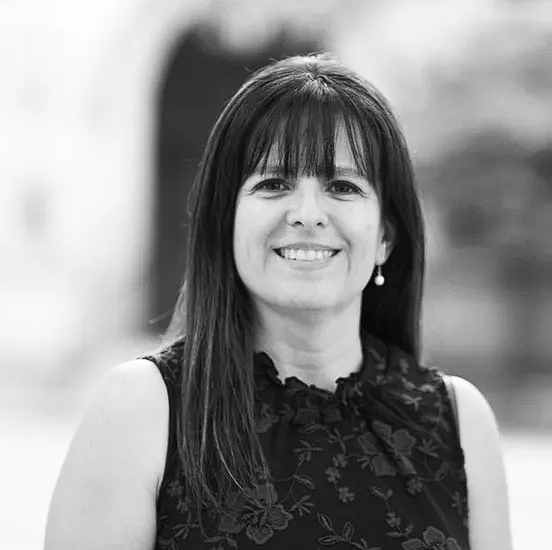
Bathanti, 59, was installed in September as North Carolina’s seventh poet laureate. He is a professor of creative writing at Appalachian State University.
His poetry has been published in the Christian Century, among other magazines, and his books of poetry include “This Metal,” “Land of Amnesia,” “Anson County” and “The Feast of All Saints.” He has published two novels, “Coventry” in 2006 and “East Liberty” in 2001, along with a book of short stories.
He spoke with Faith & Leadership recently about the influence of his upbringing and his religious life on his writing. The following is an edited transcript.
Q: Tell us about your faith growing up and how it influences your work.
I grew up in a little Italian enclave, one of the last in Pittsburgh. All my grandparents were from Europe; three were from Italy, one from France. Everybody in the neighborhood had similar equations. Some of my friends’ parents didn’t even speak English. We were very much dyed-in-the-wool Roman Catholics.
I was an altar boy, a choirboy. I went to Latin Mass every morning during the school week, and I went to church. The sound of the liturgy infiltrated me at a very early age. I loved all the pomp, the smell of incense, the statuary and the stained-glass windows.
I liked Jesus very much. I liked Catholicism well enough. I guess my big quibble is I didn’t like the nuns, the vicious women who taught me early in my life.
Growing up, I thought everybody was Catholic. I had really lovely parents and amazing friends and extended family. And I had the nicest dad in the wide world.
But I got in trouble a lot in school. It wasn’t bad stuff -- never a fight. Yet I was physically abused with boards and sticks and all sorts of things. It was the traumatizing influence in my childhood. I guess I should thank the good sisters, because they certainly have given me a lot to write about.
After that, I attended Pittsburgh Central Catholic, a private high school for working-class boys. My mother called it a private school for Catholic hoodlums, which always amused me. I was taught by Christian Brothers. I loved the brothers, and I will always love Central. It was very liberal. It was life-changing.
I go back every year and spend a week as writer-in-residence there. So my quibble has never been with Catholicism. It was just with the nuns.
I’m in Protestant churches now more than anything; I belong to one, as a matter of fact. The Spirit is still very much alive in there.
But I miss the beauty of those old Catholic churches. There were things for my eyes to light upon. I smelled things. I heard things. I was surrounded by incredible imagery. I miss that kind of Wizard of Oz, Cecil B. DeMille giant production.
Q: Do you still consider yourself a Christian?
Oh, yes. At the risk of co-opting some fundamentalist language, I do have my own personal relationship with Jesus, albeit very idiosyncratic.
I am what we would call a lapsed Catholic, I suppose. Technically, I’m even excommunicated, because 35 years ago I married a by-God Southern Baptist from Tucker, Ga., and was married at Indian Creek Baptist Church. So I’m a fallen-away Catholic, if you will. I still consider myself a Catholic.
My wife, Joan, and I belonged to Grace Baptist Church in Statesville, N.C. When we moved up to Boone, N.C., we became charter members of High Country United Church of Christ, which just celebrated its 10th anniversary.
Q: You have talked before about being steeped in stories in the church. What did that mean for your work?
Little Catholic children who go to Catholic schools know the Bible. I loved all those wild science fiction, fantasy, magical realism stories that occurred in the Old Testament.
A rod would turn into a snake and rivers would turn to blood, seas would part and bushes would burn and talk, and there was levitation. All sorts of nifty things. That stuff really fueled my imagination.
We were taught about the saints. One of my favorite books still is Alban Butler’s “Lives of the Saints,” a compendium of saints’ biographies. We heard wild stories of torture and dismemberment and gladiators. They were adventure stories, and those were some of the first really far-out, crazy and inexplicable stories that I heard.
The Bible is filled with stories with no kind of literal explanation for what goes on. So we take it on faith. And in a lot of ways, when we enter into a relationship with a text -- a poem, a piece of fiction, a play -- we also take it on faith. We feel like maybe we are in the hands of somebody who knows a little more than us.
Books can convert us in a lot of ways. We all have those kinds of texts in our life that are life-changing, which for me often means a kind of spiritual experience, too.
Q: In your transformation from Northern kid to Southern writer, did you think a lot about community and sense of place?
Although I was a citizen of Pittsburgh, I was more a citizen of my neighborhood or the schoolyard. My parents were working folks. We didn’t go on vacation. We never left the city.
I like to say one minute I was in my mother’s kitchen; the next I was on a prison yard in North Carolina. And the contrast seems that abrupt to me.
I realized after moving here that in North Carolina you are a citizen of the state, rather than simply a city or a neighborhood. I’ve traveled to all 100 counties in North Carolina. I have friends all across the state. I don’t even need a map. I can just take off anywhere. So there’s this wonderful sense of a bigger, broader community.
I guess another thing that kind of authenticated me -- this Yankee Pittsburgh Italian boy -- is that I met my wife in the very first moment of VISTA training. We’ve been inseparable since. I’ve had this wonderful tour guide with me all the time. Tied to a Southerner, I didn’t feel quite so much like the invader.
So while I’ve been able to hang on to my own culture, I’ve been able to embrace another really wonderful culture. I love North Carolina very much, and I love the South.
Q: Do you think that your working-class background has affected your practices as a writer and creative person?
I do; it provided me with a work-ethic backbone. I believe you have to work hard.
Writers actually generate writing by sitting down and putting words on a page. It takes the young writer a long time to realize that you don’t sit around and wait for inspiration. So the idea of just getting to work was ingrained in me.
And then there’s the subject matter. I recently published an essay in The Sun Magazine called “Real Work,” where I talk about the real work that my forebears did, all of whom were bricklayers and steelworkers and cement finishers and seamstresses. They worked with their bodies.
I write mainly about people who are kind of invisible. Those people are quietly toiling in their communities, whether they’re in North Carolina or in Pittsburgh.
Q: So you consider working people both a subject and a model?
I honor those people. I’m 59 years old and I’m in very good physical shape. But if I had to be working on a roof every day or doing some of the other things that men and women still have to do that’s physically demanding, it would be different than being intellectually zapped at the end of the day.
My 12 hours isn’t like my dad’s 12 hours -- I don’t care what people say. Get out there and dig ditches and see what it’s like.
I feel the distance between that kind of labor and how kids now are growing up. I teach a lot of kids who are the children of educated parents, who are sometimes the children of educated grandparents. And so I think we lose that very real connection to sweat and dirt and hardship. It’s important to respect that, even if you never do it.
Q: You have referred to the habit of writing as a habit of being. What did you mean by that?
I steal that from Flannery O’Connor. She said “the habit of art” is having a work ethic that doesn’t wait for inspiration. You get to your table every day, whether something good is happening or not. She worked every morning for three hours.
“The Habit of Being” was also the title of her posthumous letters, which had to do with her spiritual life. So I see the two as very much equated. It is a sacred office to sit down and write, in the Benedictine sense of trying to seamlessly mesh life and work and art so that it is all one contiguous, contemplative exercise.
I fail at this all the time, but it’s what I’m striving for.
Listening to myself talk, I sound to myself pretentious and a lot more ordered spiritually than I feel internally. But that’s what we do in writing anyhow. We make sense out of things on the page that had no sense when they were occurring.
As Samuel Beckett said, “Words are all we have.” So thank God for them.
Q: Your background indicates an almost vocational obligation to serve specific communities, such as prison inmates. Is that accurate?
There is an obligation that emanates from spirituality.
I’ve been so blessed. People have been so nice to me. I never felt poor at all. But my father was a steelworker. My mother was a seamstress. My dad was on strike once for an entire year. There wasn’t a lot of money to do anything. So I want to champion those people.
It’s a kind of survivor’s guilt. You see a prison inmate and you think, “He’s there and I’m here.” I go all over the place talking about prisons, and it always comes down to poverty and lack of education.
I had a mom and dad, and I had dinner every night. I had clean clothes, and people checked my homework. What if that hadn’t happened?
Also, as a VISTA volunteer, I found out about the community of mercy: social workers and psychologists and battered-women shelters and all those people doing things for people who can’t do for themselves.
My wife was a social worker for indigent prenatal patients, and we were houseparents for abused and neglected children for a year. Once I was aware of that community, they began to occupy some acreage in my conscience, and I want to serve them in some way.
We don’t say enough things like, “Oh boy, thank God that’s not me.” Instead, we say, “Of course it’s not me, because I’m so great and they’re so not-great.”
Q: You also are working on a project with combat veterans.
A young man walked into my office one day, one of my colleagues’ sons who had been a corpsman in Iraq. He asked me if I would work on an independent study with him writing about his experiences. I told him that I would, and as I began to contemplate doing it, I thought, “Why don’t I generalize this opportunity to any veteran on campus who wants to avail him- or herself of this?” But then this fellow disappeared, and those intentions went nowhere.
But I had it lodged in the back of my head, stored. When it came down to being a finalist for the poet laureate, we were all asked, “What would your signature project be?” So I just said this was what I was going to do.
There are a number of initiatives where people are doing things like this all across the state, independently. But as poet laureate, I can serve as a kind of lightning rod for all the initiatives, and maybe get some of these people talking, sharing resources and ideas.