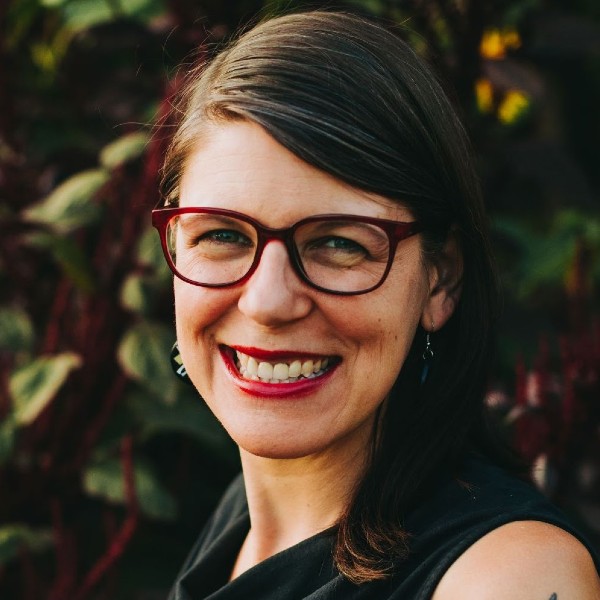

Update: The Rev. Gil Wise is district superintendent at Beacon District of the North Carolina Conference of the United Methodist Church.
One day in 2000, not long after arriving, the Rev. Gil Wise stood in his dark, dirty storefront church. The concrete walls were crumbling. The previous pastor had taken a leave of absence, and the congregation was split into factions. Week to week, Wise didn’t know if the offerings would be enough to keep going.
In a moment of despair, Wise felt God speak to him: “I came here with nothing and if I leave here with nothing, I’ve not lost anything. But if I don’t follow what God is doing, I will have lost everything.”
Since then, Wise has followed God to lead the congregation -- which includes low-income people, ex-cons, rural folk and military families -- in a remarkable resurrection. Solid Rock United Methodist Church, in Harnett County, N.C., has a budget of $1.5 million and 40 fulltime employees. The church has 425 members, whose ministry reaches beyond the plain, blue metal building where about 200 people worship each Sunday.
Solid Rock and its nonprofit arm operate three daycare sites and are opening a fourth. A food ministry gives away provisions to 600 people each weekend. They also distribute toys and clothes. A prison ministry reaches 285 men behind bars. They’ve started a theology school and are reaching out to other congregations to share their methods.
Solid Rock serves the community, reflects the community, has grown out of the community. For many of the people who are part of it, Solid Rock is the community.
“They are so authentic. They are so alive. They’re real,” said Bishop Al Gwinn, of the North Carolina Conference. “They like doing church, they like being church. They’re in love with their calling, they’re in love with God, they’re in love with one another.”
That love blossomed slowly.
Wise gave up on his storefront church, which was called The Rock, and held a funeral for it. He invited people to join him in a new venture. Just one family stayed.
To regroup, Wise sent 20,000 mailers and put up roadside signs promoting the first service for his new congregation, Solid Rock. On March 25, 2001, he held his first service in an elementary school auditorium.
Questions to consider
Questions to consider:
- What key risks were taken to make Solid Rock the community it is today? Have you taken similar risks as a leader?
- What creative ways could your organization secure funding for its ministry during this time of economic uncertainty?
- How does a leader discern “where God’s moving?” Where do you see signs of God’s movement in your organization?
About 200 people -- many suspicious of institutions, including the church -- showed up. When he saw who had come, Wise understood he had to break free of the traditional, by-the-book Methodist model. Harnett County had a 17 percent poverty rate in 2007; according to the 2000 U.S. Census, the mean per capita income of $17,000. Only about 15 percent of the schools made “adequate yearly progress” last year under state accountability standards.
“Formality was the furthest things from their minds -- their lives were chaotic,” Wise said. “They didn’t need someone to fix them and put them in order. They needed someone to meet them where they were.”
Wise discovered something else that day: God had called him to be that person.
“When I looked out, I was glad I was there,” said Wise, who grew up in nearby Cumberland County. “These are my people. This is where my heart is. This is what I’d call family.”
The vision and the community
Wise’s vision alone doesn’t pay the bills -- or his salary. Three years in, Solid Rock had run out of its startup funding from the Annual Conference. About the same time, Wise got wind that the teachers at the school where they were holding services were concerned about a lack of daycare. At least one feared she’d have to quit teaching -- a loss to the community.
In 2002, Wise created a nonprofit called Solid Foundations, modeling it on an enterprise in Louisiana. A nonprofit could engage in activities a church couldn’t do; it allowed Solid Rock to hold property, for example, before it was officially chartered as a church. And it also could do business with the school system.
So, working through Solid Foundations and funded by a $55,000, three-year grant from The Duke Endowment, the church renovated a building for a daycare. Solid Rock now has received more than $500,000 from The Duke Endowment and is one of seven partner congregations across North Carolina in the Thriving Rural Communities program, an initiative to help rural congregations and pastors.
Wise became one of the first employees of the daycare, doing administrative work and even subbing in the classroom. The first year, the daycare had nine children; by the next year it had 45. The church is proud of adhering to high standards and providing good quality daycare – two of its teachers won national awards last year.
Solid Rock now is serving more than 200 children in three centers. Solid Rock gets some funding from the state, and soon will open a fourth site to offer before- and after-school care at another school.
“A lot of our families now are members of the church. And one of the reasons is they bring their child here every day and they’re comfortable. So it’s the first step,” said childcare director Lynda Turlington.
For those who do come, Solid Rock proudly promises “church like you’ve never seen it before.” And it’s true: Few people have seen kids pedaling a tricycle up the aisle or heard the Doobie Brothers’ “Takin’ it to the Streets” during Sunday worship. The sight of daycare equipment crammed up against the sanctuary walls -- it does double-duty as a daycare site during the week -- can be a little jarring.
When Bishop Gwinn goes to Solid Rock, he often sees motorcycles parked outside. He doesn’t have a chair on the pulpit to wait his turn to preach. He sits in the front row. One week it was so jam-packed that he barely kept his balance as he stood singing, and he noticed a little boy in front of him with too-big shoes, worn backwards. But on the Sunday the church was chartered, 13 people stepped forward to be baptized.
“I was greatly taken in a positive way. That’s God’s kingdom,” Gwinn said. “That’s really the kingdom. I think I’m more in touch with who I am as a part of God’s creation when I see motorcycles and I’m crowded and I see a little boy who doesn’t know how to put his shoes on.”
Where is God moving?
The church’s entrepreneurial spirit imbues other ministries as well. “We look around and see where God’s moving,” Wise said.
Joann “MeeMee” Rice said God was moving when she wrote her first letter to an imprisoned man at the request of praise and worship leader Gene Berrier. She had never known anyone in prison before.
“If you said to me eight years ago that I would be doing this, I would have laughed in your face. How could you love a child molester? How do you love somebody who has committed murder? But you know God did. Jesus loved them,” she said. “Why do I do this? God told me to and I did it. That’s the only answer I’ve got.”
She started by writing letters to three men, and now 285 prisoners receive her twice-monthly newsletter. Two men have stayed with her after being released from jail.
“I grew up in a church and a home that were very judgmental. Very much so…I’ve been the one who didn’t want to be around those people. But I’ve [also] been on the receiving end,” she said. “When I got to Solid Rock there were people coming to that church because the churches didn’t want them, plain and simple. They might be allowed to be there, but nobody would want to be friends with them, for goodness’ sake.”
Martha’s Place, another Solid Rock ministry, has formed partnerships with entities from other churches to the county Department of Social Services. It now includes a food pantry, clothing distribution, and serves as the official county coordinator for Toys for Tots.
The Rev. Jeremy Troxler, director of the Thriving Rural Communities Initiative at Duke Divinity School, describes Wise’s leadership philosophy as “Why not us?”
“If people are hungry, let’s feed them,” Troxler said. “If they’re intellectual, let’s start a theology school. It’s not just about creating a church culture, but an understanding that church is something we do all week long and Sunday just gathers up what we’ve been doing all week long.”
In a building next to the sanctuary, associate pastor Mike Bass leads a Bible class. On this day, 11 adults sit on orange school chairs on either side of long, gray plastic tables. Mostly middle-aged and older, the students have scattered Diet Pepsis, water bottles, Bibles and papers across the table.
Wise said he and Bass each have a component of the Solid Rock vision. Wise, raised a Methodist and trained at Duke Divinity School, was not someone who’d lived on the fringes of society. Bass, a tattooed biker, comes from an unchurched background and had been an atheist.
Bass is the force behind Solid Rock’s theology school, which has been approved to grant religious degrees in the state of North Carolina.
“Evangelism cannot be properly accomplished, in my opinion, without theology,” Bass said. The school “is wholly for the purpose of introducing people to a personal relationship with God through Jesus Christ by means of the study of theology.”
Solid future
Solid Rock has flourished, but that does not mean Wise can rest. He continues to find where the church can serve people’s needs and introduce them to Jesus.
The partnership with the county is expanding; Wise also wants to join a program to send food home over the weekend with kids who get free or reduced-price food at school.
Wise and Bass also are working to spread the Solid Rock vision to other churches. For several years, they’ve invited congregations to worship with them and hear the Solid Rock story. They’ve conducted workshops for other rural churches as well.
The economic downturn has deferred one of their dreams, to build on land near the main building. For now, they’ll keep packing up the daycare on Fridays and setting it back up on Sundays.
Wise continues to be hopeful, however: “Time and time again, God has shown me that even without the money, we can get things done.”