The parents of the little boy in a wheelchair had driven from upstate New York to Johns Hopkins Hospital in Baltimore, Md., hoping they would finally get a diagnosis. Or at least find a way to make their son’s life a little easier.
But halfway through the exam, the boy started whimpering.
“It got louder until he was screaming in pain,” said Dr. Jimmy Lin, who was working on his pediatric training at Hopkins at the time. “The mom was trying to calm him down, but couldn’t. She started apologizing. She said, ‘I’m so sorry we’re creating this big problem for you guys. I don’t know what to do. We’ve taken him everywhere.’ Then she broke down crying.”
The doctor they were seeing wanted to help, but the tests and exams were inconclusive -- nobody could figure out what was wrong. It was another journey to nowhere.
 Lin said his heart broke as he watched the crestfallen family. “They were coming to … figure it out, but got no answer,” he said. “I just saw them walk down the hall.”
That was all it took to spark an idea in Lin, who is now a research instructor at Washington University in St. Louis. Something had to change. There had to be a way to help the little boy and others like him with mystery diseases that have no name and no clear treatment.
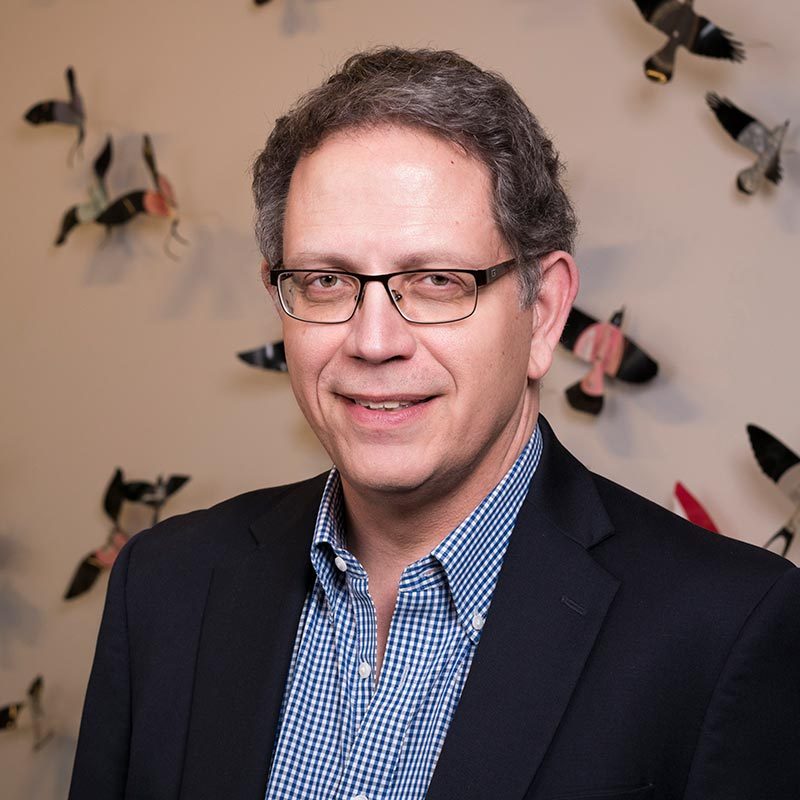
Motivated by his Christian faith, Lin founded a nonprofit organization one year ago that uses a unique social media model to fund genomics research for children with rare diseases -- sometimes also called orphan diseases -- that do not get the vital attention and research dollars invested in curing more common maladies.
The Rare Genomics Institute is an example of an organization that uses a creative approach to solve a long-standing problem: the low priority placed on rare diseases and disorders. Most public research dollars are spent on diseases that affect a large portion of the population, such as cancer.
Few cause groups, colored ribbons or walks are associated with rare diseases. But thousands and thousands of children and their families are affected by them.
By combining genomics, an exploding field of science, with crowdfunding, Lin helped create a new mechanism to pay for much-needed research in the field -- research, he hopes, that will eventually contribute to diagnoses, treatment and perhaps even cures for those suffering from these diseases.
The Rare Genomics Institute -- whose tagline is “Empowering Communities, Accelerating Research” -- helps find researchers willing to perform whole-genome sequencing for the families, determines the cost of the research and sets up social media fundraising campaigns so family, friends and others can contribute to pay for the research. The families are then connected with clinicians and genetic counselors who can explain the findings once the research is completed.
Misha Angrist, a blogger and assistant professor at the Institute for Genome Sciences and Policy at Duke University, applauds the Rare Genomics Institute for starting a nonprofit to help families who are “at the end of their rope.”
“I think he’s recognized a problem, and he didn’t ask permission or think about all the reasons he couldn’t do this,” Angrist said. “He just did it. With virtually no money, he put it together. I think it’s great. It’s a palpable outcome of the Human Genome Project that is all too rare, in my opinion.”
‘We can really make an impact’
Lin once worked in pediatric cancer research. He was part of a team at Johns Hopkins that sequenced parts of a cancer genome -- work that has helped lay the foundation for a revolution in cancer genomics.
After the meeting with the screaming boy from New York, Lin asked himself and his colleagues: Why not use the same technology used in cancer to help those with very rare genetic diseases?
Questions to consider:
- How might your organization connect people's needs, innovative ideas, financial resources, and people dedicated to service and ministry?
- How could you adapt Rare Genomics' social media and crowdfunding model for your organization's needs?
- How can you build partnerships with other institutions to increase the scale and scope of your ministries?
- How might you identify and support influential lay leaders like Jimmy Lin to use their vocational gifts and expertise in unique forms of ministry?
“The thing is, there are a lot of cancer researchers, which is great,” said Lin, a 2012 TED fellow recognized for his work in founding the Rare Genomics Institute. “There’s a lot of money in cancer, which is great. The thing is, for these diseases, nobody’s working on them. I want to put my gifts and talents in these areas where literally nobody’s working so we can really make an impact.”
Despite families’ hopes, Lin and other founders acknowledge that finding an immediate cure for an individual patient is unlikely.
Still, every time a person’s genome is sequenced and studied, it adds to the depth of medical knowledge, improving the chances that a course of treatment -- or even a cure -- might eventually be found. For the families, genomics allows them to access the most advanced scientific knowledge about their children’s conditions.
A genome is all the DNA in an organism. By analyzing a person’s genome, scientists can note variations or mutations, which can allow them to diagnose, treat and even prevent some disorders.
Some experts believe whole-genome sequencing will someday revolutionize the field of medicine. They believe disease diagnosis could become more accurate, resulting in life-changing treatments.
There are nearly 7,000 rare diseases affecting an estimated 250 million people worldwide. Many are believed to be genetic in nature, but because each one may affect only a small number of individuals, they are hard to diagnose and even harder to treat, said Imran Babar, a biotechnology analyst who serves as vice president of scientific affairs for the Rare Genomics Institute.
“The problem is, we don’t even know the mechanisms behind these rare diseases,” Babar said.
Empowering a community
Jeneva Stone of Bethesda, Md., is hopeful genomics will shed light on what’s behind the disease affecting her son, Robert, 15.
She said that Robert developed normally until he was about 13 months old, when his movements suddenly began to slow and even stop for a few seconds.
Robert endured tests for Lyme disease, toxins, poisons, mitochondrial diseases, encephalitis and metabolic disorders. His diagnosis remains a mystery. The family has never met anyone whose symptoms mirror Robert’s.
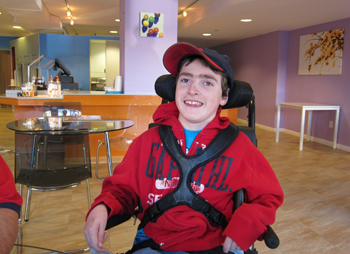
Robert doesn’t speak, is fed through a tube and gets around by wheelchair. He communicates with his family primarily through facial expressions and limited hand and arm gestures.
Robert was one of the first funding campaigns for the Rare Genomics Institute. His mother connected with Lin through a rare disease email list.
Hundreds of people contributed $7,500 for the boy’s research. Gifts ranged from $10 to $500. The average donation was $25. The bulk of the money was raised on Facebook during a two-week period. About one-third of the funds came from people the family had never met.
“It was pretty amazing,” Stone said.
Referred by the Rare Genomics Institute, the Stone family traveled to Baylor University in Texas in January to have their blood drawn for the sequencing. Results from the sequencing are expected this fall.
For Lin, Robert’s case shows the strength of the institute’s philosophy.
“We did empower an entire community,” he said. “When Robert’s sequencing comes out, even if we don’t find exactly what’s wrong with Robert, science will advance partially, because there will be a list of genes that are causing his disease. I think at the end of the project that would be success.”
Stone said she is hopeful the sequencing will give her family some answers about Robert’s condition, but even if it doesn’t, she has no regrets.
“I don’t think we’ll walk away with nothing,” she said. “I think most likely it’ll be a short list of defects causing this. Then we’ll do whatever we can do to connect with people who are doing research in this area.”
An exciting idea
Lin wishes he knew what ever happened to the little boy in pain from New York, but he has been unable to track him down.
But shortly after meeting the child, Lin began talking to some of the smartest people he knew. He sent emails to fellow participants in the Harvey Fellows Program, an initiative of the Mustard Seed Foundation that provides support to Christian graduate students in various fields of study. He posted messages on Facebook.
Babar and Scott Taing, a bioinformatics researcher at the Harvard School of Public Health, were among the first on board.
“I did not know him personally at all,” said Babar of Lin. “He said he had an idea and he was looking for people to give input. I immediately thought it was a very exciting idea.”
The core group started having weekly meetings. They recruited other scientists with similar expertise and interest. The big question was how to fund the research.
They were inspired by Kickstarter, an online system that helps people fund creative projects, and Razoo, which helps nonprofits and charities raise money online.
“Often when you have a child that’s sick in a community, everybody’s like, ‘How can we help?’” Babar said. “[With the Rare Genomics Institute] they can really contribute to not only helping this child but all of humanity in understanding these diseases.”
Lin said the network of researchers has helped the Rare Genomics Institute develop the right criteria to screen potential patients. Patient advocate groups have opened their eyes to the importance of educating families about the process. Genetic counselors have helped the institute understand the many ethical implications involved in sequencing.
One area of needed growth for the organization is fundraising. While people are more than happy to contribute to the families so the research can go forward, Lin said it’s been more difficult to raise money to pay for the operations side of the Rare Genomics Institute. Much of the work by Lin and others has been done pro bono.
Love your neighbor
For Lin, who holds an undergraduate degree from Yale University and a doctorate, a master’s and a medical degree from Johns Hopkins, faith and science are at the heart of this endeavor.
As a Christian, Lin said, the Rare Genomics Institute allows him to use his calling as a scientist to serve others. He sees a correlation between Scripture’s encouragement for believers to take care of widows and orphans -- he notes the irony of working with orphan diseases -- and the organization’s goal of aiding the underserved population of people with rare diseases.
“I think God cares about everybody created in his image, no matter if it’s someone who is very, very disabled or a Nobel laureate,” Lin said.
“Our entire organization is run in a way that is truly responding to the golden rule,” he said. “We really treat every family as if this were my son or my daughter. What would we do? We would go the full extent that we could go for our children if they were sick.”
Born in Taiwan, Lin came to faith as a freshman at Yale; in addition to his work as a scientist, he is a part-time seminarian at the Reformed Theological Seminary.
“I really think that lay ministry is very, very important,” said Lin, a married father of one. “Seminary training for me is to just deepen my understanding of the faith. I think that deep understanding should not only be for ministers; I think everyone should learn theology and church history as a context of their work.”
Lin sees his vocation as a calling from God and an opportunity to live out the biblical admonition to love one’s neighbor.
And the patients Lin works with need love. In most cases, families whose children have rare diseases have completed a battery of conventional tests and are left with little or no hope of finding a cure or a deeper understanding of the disease.
Families whose children are suffering from these diseases often are strained financially and not able to afford whole-genome sequencing, which currently ranges from $2,500 to $7,000, depending on the institution.
That’s why crowdfunding is such an important part of the Rare Genomics Institute model.
“They can start fundraising within hours of talking to us,” Lin said. “Sometimes we describe ourselves as a ‘nonprofit in a box’ for rare diseases.”
Real-world impact
Today, the Rare Genomics Institute has 18 participating universities and research institutions throughout the United States, with about 40 researchers in all. The organization is working with about 20 families, or projects, half of whom have completed their fundraising goals and are awaiting sequencing results.
Another 70 families have asked to participate.
Dr. William Graf, professor of pediatrics and neurology at the Yale School of Medicine, is working with a 4-year-old girl referred by the Rare Genomics Institute. Yale researchers recently discovered a gene mutation that may prove to be the cause of the girl’s developmental delays.
The institute says the discovery marks the first time that a crowdfunded genome project completed at the request of a patient or family has uncovered the genetic basis of a rare disease.
Graf described the Rare Genomics Institute as “an Internet-based intermediary with good ideas.” “It’s a matchmaker, really,” he said.
Babar said the organization realizes that for many people, the results of genome sequencing will not be “actionable.”
Still, Babar and his colleagues have ambitious goals. Sequencing is just the first step.
Someday, Lin theorizes, the Rare Genomics Institute may be able to develop cures using stem cell lines and model organisms so drugs can be tested for treatment.
Ultimately, Babar said, the organization would like to grow in its network of scientists and in the number of families it helps. Another goal is to attract scientists to perform the research and follow-up in-house.
“We’re really looking at anything that benefits the patients,” Babar said. “That, to me, has been very powerful. We’re looking to have a real-world impact."