
Music is a powerful means by which people construct their religious and cultural identities. And in the midst of tremendous ethnic and cultural differences in the church today, music can play a critical role in reaching all people, said Melvin Butler, an assistant professor of music at the University of Chicago.
“I’m not a theologian, but I think certainly one of the lessons is that the body of Christ is an extraordinarily diverse place,” said Butler. “We have to keep that diversity and the challenges it presents at the forefront of our minds and recognize the great potential that music has to reach people, wherever they come from.”
 An ethnomusicologist, Butler studies music and religion in the African diaspora, focusing on Haitian Pentecostalism and Jamaican gospel music and their connections to African-American gospel music.
Even beneath what many consider a monolithic “black church,” great diversity exists, he said. How Pentecostals in Haiti and even African Americans from different parts of the country negotiate their differences and the tensions between sacred and secular music has lessons for the broader church, he said.
In addition to his scholarly work, Butler is a jazz saxophonist and has played with numerous jazz artists, including Betty Carter, Joey DeFrancesco, Christian McBride and Jimmy McGriff. He now performs mostly with Brian Blade and the Fellowship Band.
He lectured at Duke Divinity School recently and spoke to Faith & Leadership about music, identity formation, jazz improvisation and the tensions of being a Pentecostal in the academy. The following is an edited transcript.
Q: Tell us about your work as an ethnomusicologist.
I look at music and religion in the African diaspora. More narrowly, I study and write about Haitian Pentecostalism, Jamaican gospel music and the connection to African-American gospel music.
Issues of boundary crossing, identity formation and social positioning -- how identities are constructed and negotiated in religious spaces through music -- are the common threads that run through all my work.
Q: What are you finding?
Maybe it’s obvious, but I’m finding that music is a critical means through which people express who they are religiously and spiritually, and also racially or culturally. It works on a number of levels.
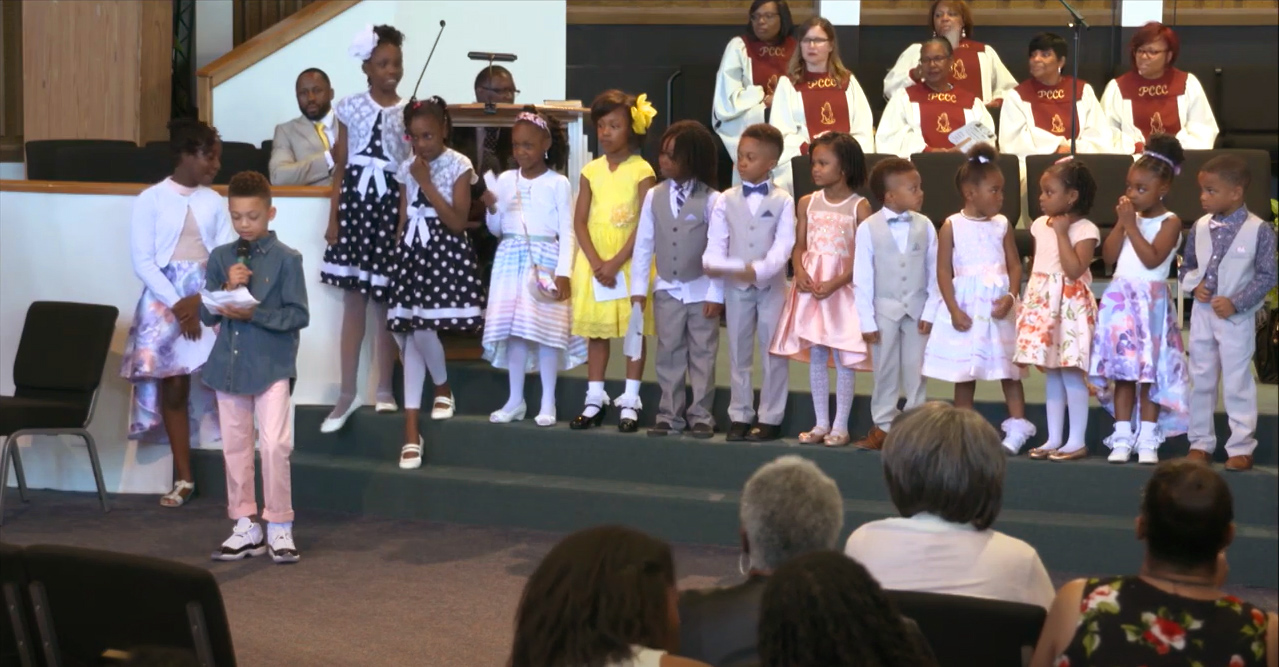
Even something like African-American gospel music, for many people, it’s as much a black thing as it is a Christian thing. You need both. You need it to be religious, or biblical, but you also need it to sound black in order for people to feel as though that they have had church.
When I decided to go to the Caribbean, I wanted to look at how people work out their religious and cultural identities through the music that they worship with. I thought Haiti would be a fascinating place to look at this, and it was.
Haiti was attractive because it’s stereotyped as being the land of Vodou, or Voodoo as we say in the United States. People have a very one-sided image of Haitian religion and what it means to be Haitian. But in fact, there is an enormous variety of not just Catholic but also Pentecostal, Baptist and other Christian churches.
No one had talked about this from a music-centered perspective. So I was the first ethnomusicologist to do research on music in Pentecostal churches in Haiti. What has been so fascinating is the way in which people say, “I’m both proud to be Haitian culturally but also proud to be a Christian, a Pentecostal Christian.”
In Haiti, any invitation to transcendence or evocation of spirit often strikes people as dangerously close to serving the spirits of Voodoo as opposed to something that’s Christian. There’s a tension for Pentecostals who want on the one hand to distance themselves from Voodoo but on the other want to embrace a very charismatic and demonstrative form of worship, where the body is very involved, people are spirit-filled but not possessed.
That distinction about the precise kind of transcendence that takes place in these heated, musically charged environments was fascinating to me. How do you be a proud Haitian but nevertheless reject a part of Haitian culture that’s often described as being inseparable from Haitian identity? If you’re Haitian, you have to serve the spirit. There’s no way around it. It’s deep inside your blood.
Q: What role does music play in that?
In Haiti, Vodoo music is one of the major means through which spirits -- the loa -- are invoked. Many Haitians are sensitive to the power of music to invite spiritual forces to be active in their midst. That creates anxiety for some Haitian pastors about the role of music and the kinds of influence that it might have on parishioners.
Is it okay, for example, to play a kompa rhythm, the Haitian dance music rhythm, in worship? Is that appropriate, or might it invite the wrong kind of spirit into this Christian atmosphere that we’re trying to maintain?
They’re dealing with this whole other set of tensions apart from just whether it’s worldly or holy. They’re dealing with, “Is it the right kind of holy? Is it the right kind of spiritual, right kind of religion?”
Q: In some ways, aren’t those same tensions at play in this culture about the role of music in worship and the influence of secular music in the church?
I think so. The tensions that play out in Haiti are more layered and more multidimensional. But African-American Pentecostal churches often talk about sacred/secular and how can we be in the world but not of the world.
There’s a nervousness about drawing too heavily on secular music, R & B and soul and rock and pop, because the emphasis should be, it’s often said, on playing music that glorifies God -- not the music of the dance club but the music of the church. So we deal with that tension, and they deal with it in Haiti, too.
Q: You wrote a paper in 2000 about a Pentecostal church you attended in Brooklyn that was half African American and half West Indian and experienced similar tensions.
Yeah, that experience living in New York, going to that church, set the stage for all of the research that I’ve done.
After I moved to New York in ’94, I started attending this church with several black ethnicities. It was not simply a “black church.” It had a large West Indian component, with people from St. Lucia, Jamaica and Barbados. It had both this West Indian Anglophone Caribbean influence and an African-American influence.
It became a source of tension when my wife and I became the music ministers. I played keyboard and organ, and she directed the choir. We were faced with these different expectations that people had about what church music should sound like.
Q: With the issues of diversity today, what lessons does that church offer to the broader church in the way it went about negotiating those differences?
Even within the black church tradition, people come from different parts of the country. They grow up singing songs in different ways and feel strongly about how a song should go. It doesn’t speak to them if the rhythm or the lyrics are changed.
So we have enough complexity even within African-American churches, and when you bring into play people from different parts of the African diaspora, you’re faced with another layer of complexities.
And that doesn’t even deal with the black/white dichotomy, the so-called worship war that has long existed between the guitar-driven, praise-and-worship style of predominantly white charismatic churches and the Hammond B-3 organ-driven gospel services of most black congregations.
I’m not a theologian, but I think certainly one of the lessons is that the body of Christ is an extraordinarily diverse place. We have to keep that diversity and the challenges it presents at the forefront of our minds and recognize the great potential that music has to reach people, wherever they come from.
Q: You have written about the tensions in being Pentecostal and a scholar and have expressed discomfort about the way academics often describe Pentecostal worship. Tell us about that and your own journey.
I grew up mostly attending a predominately white Nazarene church in Kansas City, and sometimes a predominantly black Pentecostal church. When I was 12 or so, we started going to a Church of God, but I didn’t have a consistent place of worship until I went to college in Boston and got immersed in the black Pentecostal tradition.
When I started graduate school, I never thought that I would write about Pentecostalism. I didn’t want to touch that. That was my personal life, my religious life.
But I kept encountering articles that anthropologists had written about Pentecostal practice or African-American culture, and I grew increasingly uncomfortable with how Pentecostalism or black Christianity in general was represented in scholarly literature.
It seemed as though I needed to talk about this. I needed to say something as a member of a Pentecostal church. I felt that I could talk about it in a more sensitive and nuanced way, in a way that did justice to how people actually felt and what they experienced in these contexts, because I was one of them.
I had become a Pentecostal. I had experienced the baptism of the Holy Spirit while in college and was strongly committed to my identity as a Pentecostal Christian, as I am now.
To write about that seemed necessary but also frightening, in that I didn’t want to reinscribe some of the same kinds of academic representations that I’d been opposed to. I didn’t want to become one of the academics, one of “them” -- one of those people writing about Pentecostalism from some sort of detached reductionist perspective.
But ultimately, I felt like it was my calling. I had to do it. What else was I going to write on?
Q: A few of your articles quote a scholar who says that whenever academics write about Pentecostals, they always have a stock disclaimer that says basically, “This is what they believe and thus it is real for them,” with the unspoken part being, “but not for us.”
Yeah. That’s Glenn Hinson, an anthropologist at UNC-Chapel Hill. I’ve never met him, but I’ve admired his work. His book “Fire in My Bones: Transcendence and the Holy Spirit in African-American Gospel” was eye-opening, because he said exactly what I had been feeling, that there was a tendency in the academy to write about issues of faith or religious experiences as though they were simply rather interesting culturally: “How cute that people think that God is touching them or that they feel this, but of course we really know that that’s simply emotionalism or a psychological state.”
There are all these strategies and techniques of disbelief, as Hinson calls them, through which academics have tended to confine religious experience to this other realm of “less real” than the reality that we enlightened academics are aware of.
And I was like, “Yes! This is what I’ve been trying to say.”
Q: You’re also a jazz musician. What lessons does jazz improvisation offer for church and church leaders?
Someone wrote somewhere that God is the master improviser. There’s a tension between structure -- having a plan, an order, a divine will -- on the one hand but then also allowing for human agency, free will, creativity, spontaneity, where things don’t go according to plan, where anything can happen at any given moment.
Maybe jazz improvisation can be a metaphor for understanding something about God and God’s creation. I don’t know. I certainly think, as an improviser who works with other improvisers, that there’s a really fun and productive challenge to be had. We all have our individual voices -- we have things to say, things we’re working out -- but we find ways to interact together in peace and in fellowship.
The band that I play with, Brian Blade and the Fellowship Band, is very much about that. Sometimes soloists are featured, but 90 percent of what we do is centered on this idea of a group sound, of finding ways to talk to each other, to convey a sense of true fellowship and unity. There’s not this spirit of selfishness, standing out from everybody else. We’re all contributing to a greater good, something that’s beyond any individual.
Q: I gather that’s not a typical approach to jazz improvisation, which can seem like a competition, trying to outshine each other.
Yeah. There’s an aspect of sport in jazz improvisation. The classic example is the so-called cutting contest, where soloists line up and see who can outdo the next person.
When I first started playing with Brian, I was surprised that it was so unlike that. It was very much not a competition among us or with other groups.
Listeners were surprised when the first record came out back in 1997, 1998. People wondered what it was and what to call it.
“Oh, is this jazz? Can this be jazz when it doesn’t have that sport element, that aspect of competition and cutting, playing the melody and then everybody taking turns soloing?”
It wasn’t that at all.
Q: Blade comes from a church background, right? His father was a pastor?
He did, yeah. The titles of his songs -- “Return of the Prodigal Son,” “Alpha and Omega” -- from my perspective obviously often reference a biblical theme, but he doesn’t hit you over the head with it. He’s not at all preachy in one-on-one interactions or with his audience.
Unless you ask him or unless you’re attuned to the biblical references, you might not know that he’s coming from a Christian perspective. I think that he would say that his upbringing as a pastor’s kid, as someone who grew up playing in a church, informs his outlook and even the title of the group, Fellowship.
Q: Does faith shape the way you play?
Oh yeah. Absolutely. I’m definitely trying to do more than just entertain people. It’s one of the reasons why I don’t do a lot of gigs now.
I get little satisfaction from playing in contexts where people aren’t there to hear the music; they’re just there to have a drink and talk to friends, and the music is background noise.
Why would I want to do that? I feel like I have something to offer, something that I must offer to people. I want to minister to people while I play.
The older I get, the more I think that way -- that there’s something I convey to them beyond the notes, that I can touch them. Enough people have come up to me saying how their lives have been changed and transformed that I realize that maybe music can work this way and be really powerful.
I’m spoiled now. That’s all I want to do. When I play music, I want to touch people or minister to them.