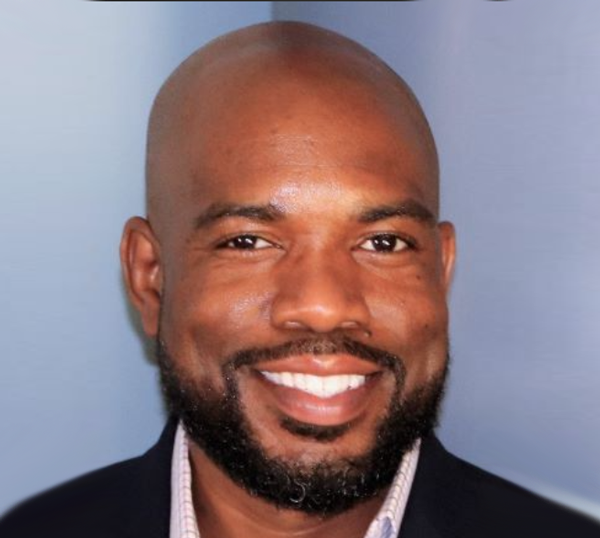
In the business world, the globalization trend is so well-known that it’s a cliché, said Ben Wildavsky, a senior scholar in research and policy at the Kauffman Foundation. But a lesser-known -- and equally important -- phenomenon is the globalization of higher education.
Take as an example Choon Fong Shih. He grew up in Singapore, earned an advanced degree from Harvard University, became a professor at Brown University, and then returned to Singapore, where he served as president of the National University of Singapore for nine years. Today he’s the founding president of King Abdullah University of Science and Technology, which opened in Saudi Arabia in September 2009.
 “That’s just one example [of the mobility that characterizes global education], and I’m not suggesting it’s typical, but I do think it’s emblematic of the possibilities that exist,” said Wildavsky, who describes what he calls “the new university globalization” in his book “The Great Brain Race.”
As former education editor of U.S. News & World Report, Wildavsky was the top editor of the publication’s annual college ranking guides, “America’s Best Colleges” and “America’s Best Graduate Schools,” in the 2000s. He’s also an education reform consultant who has written or edited several national reports, including “A Test of Leadership: Charting the Future of U.S. Higher Education,” which was issued in September 2006 by the U.S. Secretary of Education’s Commission on the Future of Higher Education.
Wildavsky was one of five speakers in a lecture series at Duke University called Re-Imagining the Academy. He spoke with Faith & Leadership about the globalization of higher education and the implications for students and institutions. The following is an edited transcript.
Q: What do you mean by globalization of higher education?
What we’re seeing is the development of a global higher education marketplace, which has several components.
One of them is an increasing mobility of students, which is happening very, very fast. There are 3 million globally mobile students. It’s up about 57 percent just in the past decade, and it’s projected to go to 8 million by 2025. What that means is that we are seeing a mobility of students to a degree that’s unprecedented in history. We’ve always had mobile students, even going back to the Middle Ages -- the development of universities in places like Paris and Bologna and Oxford. But now it’s on an enormous scale.
We’re also beginning to see greater mobility of faculty. Not as much as students, of course, but you do see faculty and sometimes administrators moving around to work in different countries. Something like half of the world’s top physicists no longer work in their home countries.
We’ve also seen the development of global rankings. We’ve seen rankings in the United States with U.S. News & World Report, and many other countries have their own individual rankings -- there are more than 40 around the world. But now we have [global] rankings by Shanghai Jiao Tong University, the British publication Times Higher Education, and other organizations. This reflects the fact that students are trying to pick and choose among universities in different countries and that government policymakers are trying to figure out which universities are successful in research and where they should put their funding priorities.
So we have mobility and we have rankings -- and we have something that’s related to both of these: the quest everywhere to create world-class universities. You see this in China; you see this in South Korea; you see this in Singapore; you see this in Saudi Arabia. You also see this in places like France and Germany, which used to have great universities but have had problems in recent decades. Now they’re trying to focus their money on a targeted group of research universities that they think have the potential to be real players on the world stage.
Q: In the chapter “Branching Out” in “The Great Brain Race,” you provide a number of examples of satellite campuses that Western research universities have tried to open in Asia but that have fallen short of expectations and have closed. What’s the difference between those who make it and those who don’t?
The quick answer is there is no road map. A lot of these places -- like the Middle East, for example, Education City in Qatar, or New York University’s campus in Abu Dhabi -- are still works in progress, so I think in some ways it’s too soon to say.
Universities have to think carefully about what their goals are. If they are simply trying to make money, I think the prospects are probably mixed. There are some places that have succeeded in making money. There’s a Scottish university called Heriot-Watt University that has made quite a lot of money in Dubai. Of course, we know there are some other places where other universities have pulled out when their enrollment projections didn’t pan out.
So I can’t say that there’s a formula for success. When your funding is coming completely from your host, you don’t need to worry about making money, and you don’t need to worry too much about losing money. Maybe you’re trying to create a global footprint as a university. Perhaps you’re trying to pursue certain kinds of research opportunities for your faculty. Perhaps you’re just trying to become more globally minded as an institution.
Q: How do you become a global institution but keep your mission intact and not dilute its quality?
If you’re creating an overseas branch or if you’re creating a partnership, one of the important things is to make sure that you get a critical mass of your faculty on board, because, as somebody said to me when I was working on the book, “The faculty is the university.”
Some universities have had trouble, when they’ve created branch campuses, with getting enough faculty over there. I think that’s problematic. It risks diluting quality, and it risks diluting your core identity as a university. But I don’t think that’s an inevitable problem. I think you have to work at it.
I think you could have the same problem within the United States if you tried to expand very quickly. Even domestically, you have to worry about preserving your identity.
But I do think as more institutions start thinking of themselves as global institutions, then you could argue that entering into partnerships overseas or creating campuses overseas isn’t a threat to your identity, and that in fact you’re helping reinforce your identity if it is your aspiration to be a global institution.
Q: What do students gain from being part of a global institution?
I think that the great advantage of mobility and of this kind of global marketplace is that students have the opportunity to go out and pursue opportunities, whatever and wherever those opportunities are. If you’re a student in a country where you may not have adequate opportunity educationally -- where there may not be enough university places available, which is true in many places, like India, for example, or the education available may not be of high enough quality or what you want -- you now have choices.
In fact, I would even go further and say that the merit principle is really what the success of Western research universities rests upon. The best students are admitted based on merit, faculty are hired and promoted based on merit, and research funding is awarded on a competitive basis. I think that those are all things that are very attractive to students, particularly in countries where that is not the case and where there’s nepotism or favoritism or corruption in the university system.
I wouldn’t suggest there is a perfect meritocracy as universities globalize by any means, but I think slowly but surely we’re getting to a world where you can get ahead based on what you know, not based on what your social or family background is. That’s why I think this is a very exciting world for students -- because it’s opening up a lot of opportunities.
Q: You wrote in your book that rankings will have an important role in the globalization of higher education. What role will they play, and why are they useful?
Rankings are useful because they provide an external yardstick that can measure how universities are doing in a range of areas. Although the rankings have many flaws, if you’re measuring something like research productivity and you’re trying to look at the effectiveness of research universities, that’s a reasonable measure.
This year, Times Higher Education changed its ranking methodology, and they basically normalized the measures they were using to reflect the fact that researchers in some fields publish much more often than other fields, which means that if the university has a lot more science departments than other kinds of departments, their ranking could be affected by that.
We’re in the age of accountability, and rankings aren’t perfect, but they’re here to stay and there are some interesting initiatives under way to measure the effectiveness of universities. The Organisation for Economic Co-operation and Development (OECD) has a new effort to try and measure how much students are learning and how much undergraduates are learning in college. I think that’s very important, and I think the real task for universities is going to be not to run away from rankings or to endlessly criticize them but to try to figure out how to make them better.
Q: What do you think other institutions can learn from what’s happening with the globalization of higher education?
In a world of knowledge mobility and talent mobility, universities that adopt the merit principle are going to be the most successful ones. This is true in other areas of society, as well.
Not everybody is going to be equally involved in globalization, but I think that businesses and other organizations that are looking for talent should understand that trying to create the freest possible sort of exchange of people and ideas around the world is very beneficial for individuals, for institutions and for economies.