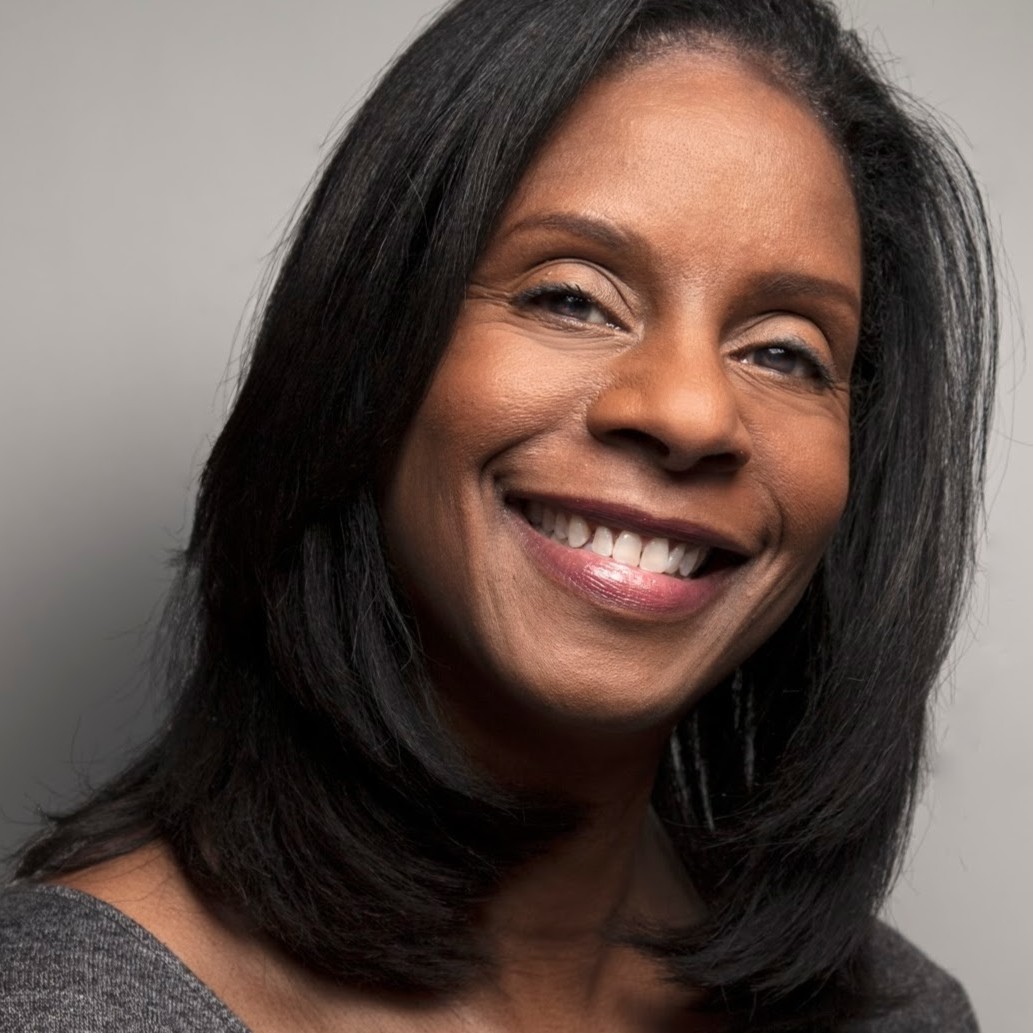

When the Rev. Jeanette Hicks graduated from seminary in 2010, a mentor cautioned her about overwork. A retired pastor, the mentor hoped that Hicks and other young clergy would do better at staying healthy over the long run than she and her contemporaries had done.
But just six months later, Hicks, a United Methodist pastor then serving in the Kentucky Conference, was a sleep-deprived wreck, surviving on sugar-fueled energy and calorie-dense church meals. Despite the good advice and her best intentions, she was a walking portrait of exhaustion, with dull hair, brittle fingernails and dark circles under her eyes.
“I’ve always been a physically healthy person,” she said. “But many days I’d look at the clock, and it’d be 3 p.m. and I hadn’t eaten yet. If I took time to eat, well, that was time away from getting something done.”
Hicks’ experience is not unusual. Even with the best intentions and all the knowledge and advice in the world, clergy of all ages often find it difficult to take care of themselves, the Duke Clergy Health Initiative has found. On the long list of items that must be done every day, they often put themselves last.
Many pastors misunderstand self-care to mean “self-ish,” said Rae Jean Proeschold-Bell, the initiative’s research director and assistant research professor at the Duke Global Health Institute.
“Clergy recognize the importance of caring for themselves, but doing so takes a back seat to fulfilling their vocational responsibilities, which are tantamount to caring for an entire community,” Proeschold-Bell said. “They feel they need permission to take the time to attend to their health.”
As a participant in Spirited Life, the Clergy Health Initiative’s wellness program, Hicks is learning how to give herself that permission. A two-year program of intervention services -- part of a broader study of clergy health among UMC pastors in North Carolina -- Spirited Life emphasizes stress management and healthy eating, underscored with scripturally based reasons for taking care of oneself. The initiative has found that this scriptural connection is essential for clergy, for it makes the practice of caring for themselves a part of their calling, not an additional task to complete.
Now an associate at Trinity UMC in Jacksonville, N.C., Hicks is making an effort to set boundaries and create time to care for herself and her family.
As the Clergy Health Initiative learned in a series of clergy focus groups in 2008, pastors can get caught up in trying to meet what may be unrealistic expectations -- both the congregation’s and their own. One of the most pervasive and damaging is the notion that clergy should be available around the clock, seven days a week.
“I can’t tell you how many times people say to me, ‘Well, I know Friday is your day off, but …,’”Hicks said. “I know maybe two clergy that I think of as being good at [setting] boundaries, and they get a lot of flak about it.”
In the face of such expectations, it’s easy for pastors to fall into the trap of feeling guilty when they take time to care for themselves.
“When you do take care of yourself, there’s a sense that you’re not taking care of other people,” Hicks said.
Hicks points out that even when she’s not at work, she is still caring for others. Each evening, she returns home to find her four children and husband waiting for her attention.
Back in Kentucky, fatigue became a huge factor as she felt pressure to do ever more. As each new task presented itself, she felt compelled to address it immediately. Otherwise, it would take time away from her family later.
In the clergy focus groups, the Duke researchers found that many pastors believe that church members do not understand the breadth and depth of pastoral ministry. One pastor remarked that congregants “are aware we work one hour on Sunday, and they don’t realize [we work] the whole rest of the week. There’s no such thing as a 40-hour week.” Another pastor pointed out that “every person sitting in the pew has a separate job description for our job, and when you put it all together, it’s an impossible task.”
Only a few months into a new appointment -- his first as a solo pastor -- the Rev. John Michael McAllister is already beginning to feel the weight of such expectations.
In July, McAllister became pastor of Trinity UMC in Raleigh after four years as an associate at a larger church across town. After 10 years of declining membership, Trinity had asked for a younger pastor to help them identify ways to be engaged in the community. As their new pastor, McAllister wants to deliver.
“There’s a real vibe here that we are ready for some change, to have someone who is keen on making some connections in the community,” he said. “I’m really trying to capitalize on the new-guy, new-thing capital that I have right now.”
In his first month at Trinity, McAllister held 45 meetings with community leaders, made at least as many pastoral care visits, and wrote and delivered four weeks’ worth of sermons. He knows his pace isn’t sustainable, but he’s not quite sure how to cut back when the time comes.
Eventually, he hopes to return to a pattern that worked well for him at the church where he was an associate. There, the senior pastor made sure everyone understood that Fridays were the pastors’ official day off. McAllister also set aside Saturdays for sabbath and time with his wife, a practice that he says is “not really optional” for sustaining his mental health. He spent the first half of the week on visits and administrative tasks and used Thursdays for writing his sermons.
The schedule worked, but like many pastors, McAllister still felt strong pressure -- from both himself and others -- to put other people first. And also like many pastors, he felt deeply rewarded whenever someone praised him for going above and beyond.
Fortunately, McAllister has a team of supporters who help him fight the guilt and resist the temptation. His wife and a covenant group of other pastors help him remember to set boundaries.
It can be easier for other people -- especially people who know and care about you -- to see when life is starting to get out of balance, McAllister said.
But it’s not enough to just set boundaries. You also have to keep them. When church members call about non-urgent matters on his day off, McAllister has been kind but firm, asking them to wait.
“Just because you can always reach me in an emergency doesn’t mean that I’m available 24/7,” he said. “Some people get that inherently. Some people do not.”
At the same time, self-care doesn’t mean pastors have to set impregnable boundaries. Hicks, for example, found that she was able to integrate self-care into her ministry, engaging the congregation in the process.
Realizing that her own guilt would make it impossible to schedule time just for herself, she looked for ways to incorporate those opportunities into her ministry. During Lent, she taught yoga to her congregation as a discipline of body, mind and spirit.
“I was surprised by how many people came and how readily accepted it was,” she said.
As instructor, she would move around the room and, when necessary, ask participants if she could guide their bodies into more effective positions. The class -- and the connections it forged -- became an unexpected and effective opportunity for ministry.
Moving the participants into a new yoga position, she could often feel the tension in their muscles, and when she commented, they would inevitably tell her about some stressful event that had happened recently.
“When I just see people on Sunday, I don’t have that interaction with them,” she said. “There was a surprising amount of vulnerability.”
More than just a health class, the yoga group became a spiritual experience. The group incorporated communion and prayer into some of the sessions and ended each session in silence.
“People would really talk about the inner peace that that gave them and how God spoke to them,” Hicks said. “They didn’t want to get up. They didn’t want to leave. And I would think, ‘Why can’t church be like this?’”
Approaches that tie together mental, physical and spiritual health are often the most effective in convincing clergy to take better care of themselves, the Clergy Health Initiative has found.
Hicks is a believer. She’s seen too many pastors run into the ground by ministry.
“We’re not honoring the vessel that God has given us to work with when we do that,” she said. “Honoring our bodies and our time, taking sabbath -- these are as important as caring for others.”
McAllister, too, remains hopeful -- and for very practical reasons. He loves ministry and wants to be in it for the long run.
“If I don’t establish some healthy rhythms, some healthy boundaries, I’m not sure 15 years from now if it will still be the coolest job in the world,” he said.