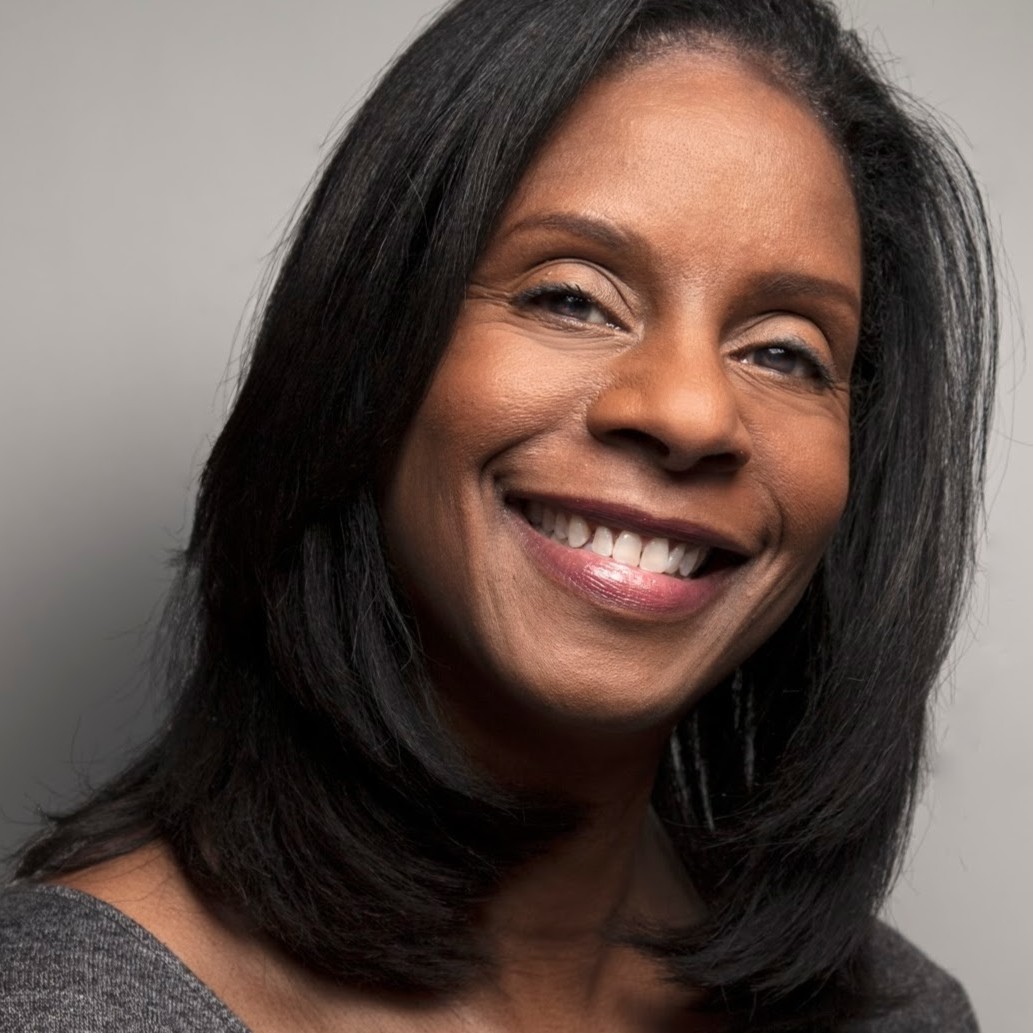


Like many college students, Marissa Marolf is on her iPhone all the time.
But it’s not just Facebook or Instagram that holds the senior biochemistry major’s attention. She’s just as likely to be watching a professor’s podcast while in science lab, looking up notes in a digital version of a textbook or using an “awesome” app that offers an online lexicon for her ancient Greek course work.
As part of the uniquely connected campus at Abilene Christian University (ACU) -- the entire student body and faculty share the Apple platform through the iPod Touch, iPhones and, increasingly, iPads -- Marolf has received more than just knowledge.
She has also been given the world at her fingertips -- and if all has gone as planned, her time at ACU will have provided a solid grounding in sorting the most useful, relevant and effective parts of that world from the rest.
“You have this resource in your hands,” she said. “All of this information is available. But it’s up to you what you do with it.”
On a broader scale, the same could be said for the university, a Churches of Christ-affiliated institution of roughly 4,500 students in West Central Texas. Over time, information and ideas have become increasingly available. The school’s ACU Connected initiative sees professors conducting instant polls among students to gauge comprehension and holding test-prep sessions via text to boost participation.
But the conversation has also broadened to a greater type of “equipping,” including learning about community, justice, theology, servant leadership, relevance and interdisciplinary solutions -- all aided by the freedom of being able to learn anytime, anywhere.
Consider ACU@CitySquare, an emerging partnership between the school and an innovative nonprofit that addresses the root causes of poverty in inner-city Dallas. Teams of students have already been involved in the project, which exemplifies the core identity and central mission of ACU. But by next year, with the help of technology, ACU will have its own campus on the second floor of a building CitySquare owns, about 200 miles away from Abilene.
Students will be able to live and learn among those they hope to help, and the school’s technology center -- outfitted with the latest in touch-screen and video capabilities -- will also serve as a hands-on learning environment for area residents in the heart of Dallas, helping bridge technological divides.
“It’s the notion of community and servant leadership that drives this partnership,” said ACU alumnus John Siburt, CitySquare’s assistant vice president of programs, who is responsible for overseeing the ACU@CitySquare collaboration. “Technology will be a tool. What’s going to be interesting is to see how ACU’s theology gets embodied through it.”
Making technological history
ACU’s technological initiative has a rich past. The school’s mission is to educate students for Christian service and leadership throughout the world, and the ability to do that in today’s times must incorporate the already-prevalent use of technology.
In 2006, ACU was one of the first universities to use video iPods for downloading and accessing study materials in graduate distance-education programs. Faculty and, eventually, fellows at ACU began researching whether blanket use of a variety of Apple devices could create greater engagement, enhance learning and open new doors of possibility.
Questions to consider
Questions to consider:
- How do you sort the “most useful, relevant and effective parts” of the world from the rest? Does technology help or hinder that effort?
- How have new technologies changed your organization and the way it pursues its core mission?
- What is the role of leadership in a world where everyone has “access to everything they want to know at their fingertips”?
- What practices do you use to ensure that technology is not cutting you off from the world but is helping you to experience it more richly?
In late summer 2008, ACU offered the choice of the Apple iPod Touch or iPhone device to every incoming freshman -- about 900 students -- in addition to select faculty. University visionaries had realized that students in the class of 2011 were born the same year as the World Wide Web, so that they -- and all those to come -- had never known a time without it.
That August, the school set the unofficial record for the most iPhone 3G activations in one location in a 24-hour period, with 612. National and international media attention followed, as did accolades, along with requests for site visits and faculty presentations elsewhere.
Today, all students and the roughly 250 faculty members employ the devices. (Each receives a $199 credit to be used as he or she chooses; data plans have never been included.)
Interest in documenting and researching the effort has been paramount since the beginning; faculty turned in more than 120 mobile-learning research proposals following an initial call. The school partnered with AT&T for the use and study of mobile devices among students and faculty, and has received grants from other sources as well.
“We jumped in with both feet,” said John Weaver, dean of library services and educational technology at ACU. “Among some individuals, I think the Christian label is equated with an anti-cultural or countercultural perspective. So the adoption of digital technologies as a predominant cultural form would fly in the face of that perspective. But at ACU we recognize that throughout the history of Christianity and, more specifically, Christian education, technology has supported Christian service and leadership.”
Today, with the world of information available at the touch of a button or screen, new ideas of community, the changing student-teacher relationship and the possibilities of contextual learning are shaping generations in ways not yet fully understood. The devices aren’t just changing the way courses are taught or subjects are learned. They’re changing the way people think.
And in a time of “crowdsourced” truth, Christian leaders both within and outside ACU fully realize they must be part of the conversation to help shape it, figuring out their own boundaries, opinions and best practices alongside everyone else.
“If we don’t, we will lose the opportunity to be a voice of faith and love and hope in this digital space, where so many people communicate, share and spend a lot of time,” said Verity A. Jones, director of the New Media Project -- an ongoing effort to help religious leaders become “theologically savvy” about technology -- at the Center for Pastoral Excellence at Christian Theological Seminary in Indianapolis. “There’s an opportunity to bring the gospel, to bring God’s love, into this space.”
If Christian leaders and educators don’t help define the path, Jones said, “it will get defined for us.”
An ongoing connection
The mobile learning experiment at ACU takes many forms, and faculty and students continue to take part in research projects to document and establish best practices.
One project, for example, includes developing and field-testing applications for enriching students’ spiritual development, comparing students who attend regular chapel services to those who experience a “mobile chapel.”
Other research looks at the effects of connectivity on teaching and learning, and there are many examples of practical applications on campus.
Houston Heflin, assistant professor of Bible, missions and ministry, said he engages large classes of 50 or 60 students by asking questions and then scrolling their texted responses on-screen. The entire class gets to participate in a way that they couldn’t by raising individual hands.
Scott Hamm, who is the director of mobile learning research as well as a professor, texts his students feedback from class, in addition to links relevant to the course work and words of encouragement.
“Interestingly, it’s the inspirational messages and words of encouragement they like the most,” Hamm said. “I’ve found they’ll share more with me in return.”
Communication with professors was once relegated to office hours and the brief moments before or after class, he said, but the opportunities for mentoring, guidance and modeling faith have expanded exponentially.
Marolf said that even during chapel, it’s common to see students with their iPhones and iPads in hand, Bible apps open. There is no longer talk of “going online.” Rather, the students, faculty and that world of information are in ongoing, fluid connection.
On a recent visit to his alma mater, Siburt saw a student raise a hand -- respectfully -- to correct a professor with information the student had found on his mobile device. It was something Siburt couldn’t have imagined while he was in school. (He earned bachelor of arts, master of divinity and doctor of ministry degrees from ACU.)
The professor, however, “just gave an acknowledgment that this is the age we live in…. These students don’t have to have a professor tell them anything. They have access to whatever they want to know at their fingertips.”
A world of temptations
That access to information certainly opens a world of possibilities. But it can also mean a world of temptations. As 22-year-old Marolf said, “You can do a lot of things on a phone other than learn.” The university does employ a filter on the Internet, and questionable sites are blocked and reported.
Although the school’s embrace of technology is wholehearted, it is not uncritical. Heflin said he sometimes explicitly tells his students to put all their devices away. There are times for them to be used appropriately in class but also times that he wishes “the student in the back of the room -- or even the front of the room -- wouldn’t be texting.”
As a faculty member, he said, he struggles: “We’ve given the students at ACU mobile devices, and they use them incessantly. One of the things we need to continue to work on is having healthy habits.” And that has to be modeled by faculty as well, he said; it’s all too easy for students to fall into idolatry in the form of addiction.
“If you have a spare second and you’re automatically reaching for your device, that’s becoming unhealthy -- if you’re giving your heart, attention and devotion to your mobile device rather than to the people around you and to God, who is ever-present. What are the religious and spiritual implications of that?
“We have the term ‘spiritual disciplines’ for a reason; we must engage in activities that make us more aware of God and bring us closer to God, and yet there’s this competing force, this thing that consistently draws our time, attention and affections away. That’s a little dangerous.”
The danger is present throughout our increasingly technological society. But in the educational setting in particular, another temptation arises: the lure of looking up information rather than holding that information in the brain.
ACU faculty members said that their roles have changed, moving from suppliers of information to guides that help students sort through the mountain of information available.
“On a basic level, students still need to learn, to memorize and process information,” Heflin said. “If you’re in a job interview, you can’t say, ‘Just a minute -- let me Google that and get back to you.’ That won’t work. Or when you’re counseling a family that just lost a baby, and they’re asking, ‘Where is God in this?’ you can’t say, ‘I’ll be right back.’ You’ve got to be present.”
Conversely, William Rankin, associate professor of English and an Apple Distinguished Educator, sees the availability of information as a boon.
“It becomes a part of who we are,” he said. “Even as professionals, there are still things we look up. You may never be able to remember x, whatever it is, but as long as you have some sort of access to find it, it’s not really a problem, is it?”
In a video on the ACU website, he explains that being able to carry a library of information in your pocket isn’t just handy; it means that students are no longer bound to the four walls of the classroom. A botany student, for example, can identify trees while standing in a forest.
When memorization is the focus, testing may be more about proving that the information has been memorized than actually applying the information in context. But being able to step outside the classroom -- and experience case studies in person rather than simply reading them from a book -- changes the dynamic.
For example, Honors College students doing interdisciplinary studies in economics, political science and social work took part in a recent poverty simulation exercise at CitySquare. They were instructed to prepare lunch for the group of 27 at a rate of $1.50 per person, less the cost of the public transportation required to gather the food. They also discussed the underlying issues face-to-face with community leaders, including a longtime area pastor, a representative from an economic development group, a civil rights leader and others who shared background and insight.
“Being able to get that information firsthand opened up a whole world for the students educationally,” Siburt said. “They got to hear what it was like to live in that neighborhood, and what it meant to try to revitalize it.”
Rankin agrees with the thought that technology can become “an extravagance that cuts us off from the world.” On the other hand, he said, “it can allow us to more richly experience the world.”
Marolf discovered this one summer when she took a class at another Texas university. It was more traditional, without the embedded technology -- and also less engaging. She ponders carefully how mobile learning has affected her life, her course work and her spiritual walk but doesn’t have the answers just yet. “I don’t really have much to compare it to,” she said.
She’s never known a world -- or a worldview -- without it.