
I remember standing outside the operating room as they prepared my wife for a Cesarean section to bring our first child into the world. “Things will never be the same,” I thought. “I’ll never not be a dad again.” My deep thoughts were interrupted by the doctors getting ready to go in.
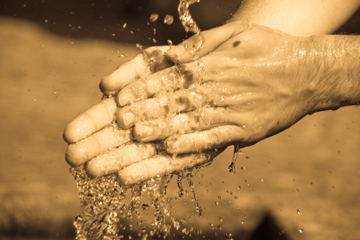
They were washing their hands. Again, and again and again. Up to their elbows. With frothy bands of white soap. They were almost yukking it up amidst the suds, like teenagers washing their dads’ cars. How would they ever dry all that off? How do you wash your hands like that and not chap them into dust? And why am I thinking about this instead of about the wife they’re about to cut in half and the kid we’re about to welcome into the world?
For Atul Gawande, author of the books “Better” and “Complications,” they were doing precisely what they ought to have been and in precisely the right way. For as much medical know-how as we have -- more than our ancestors could have imagined, let alone replicated -- we still don’t know how to get doctors and nurses and other hospital personnel to wash their hands as much as they ought. Two million Americans get an infection in the hospital. Doctors and nurses wash their hands perhaps only half as often as they should. The doctors I saw that day were doing it right. I should have kissed their feet (not their now-sterile hands). I had no idea how lucky we were.
Gawande, as an author lyrical enough to write regularly for The New Yorker with an eye critical enough to ask a dumb question, is always on the lookout for a “positive deviant.” That is, a place where things are unexpectedly better. He found it in a hospital in Pittsburgh, and an expert who helped it cut its rate of MRSA or staph infections by 90 percent. Their innovation? They asked doctors and nurses how to get people to wash their hands. In return they got stories of missing hand-gel dispensers, places that were always out of soap, low supplies (necessitating a huffy trip back to an unsterile supply closet) and so on. With this information, they made changes, the staff bought in, compliance soared and patients benefited.
Gawande’s essay on hand-washing -- simple, doable, and often avoided as it is -- raises the question of what similar, simple acts we in the church are failing to perform. What are we not doing now that we should be doing? What mind-bogglingly easy practice could we tackle more assiduously to save the lives of the people we serve?
The most obvious answer is prayer. If doctors ought to wash their hands carefully, slowly, getting under every fingernail and up every elbow every time, we ought to pray. At length, not in a hurry, around every problem, every uncertainty, every time we engage with someone who has come to us. Our life and practice should just as literally be bathed in prayer, from beginning to end. Without it infection sets in. The ailment gets passed from person to person, and is terribly hard to get rid of.
How might we design the structures of our lives, in the way the Pittsburgh hospital reshaped its design, to enhance prayer? Catholics do this by placing holy water by the doors of their sanctuaries; Jews by placing reminders of the law on their doorposts. Would kneelers help? Images of the saints? Warning signs: “Caution: do not enter without praying?” One ancient Christian paid someone to stay awake and pray while he slept, so that together they would fulfill the biblical injunction to “pray without ceasing.” (1 Thessalonians 5:17). It’s an impossible, almost nonsensical command in isolation. But read in community we can pull it off.
Perhaps we have the answer to that question, but not without consulting the “we” in full. The staff of the hospital in Pittsburgh had to weigh in to solve their problem. What might God’s people say if we asked them how to structure our lives to maintain constant attention to the God who longs for fellowship with us?